
Kaffeelix
Colombia White Honey Gesha - white honey
Colombia White Honey Gesha - white honey is a Sebastian Ramirez, El Placer, Quindio, Honey, Gesha coffee from Kaffeelix.
In stock since:
Details
- Origin
- Sebastian Ramirez, El Placer, Quindio
- Process
- Honey
- Variety
- Gesha
Available Sizes▾
- 125g — $23.70 ($18.97/100g)
- 250g — $41.01 ($16.40/100g)
Colombia White Honey Gesha - white honey
Colombia White Honey Gesha - white honey is a Sebastian Ramirez, El Placer, Quindio, Honey, Gesha coffee from Kaffeelix.
In stock since:
Details
- Origin
- Sebastian Ramirez, El Placer, Quindio
- Process
- Honey
- Variety
- Gesha
Available Sizes
- 125g — $23.70 ($18.97/100g)
- 250g — $41.01 ($16.40/100g)
Similar coffees to this Sebastian Ramirez, El Placer, Quindio Honey Gesha

CGLE Gesha Hybrid Washed
Valle del Cauca, Caicedonia, Colombia Hybrid Washed Gesha
Modcup Coffee
$35.00

Gesha Beans
Caicedonia, Valle del Cauca, Colombia Honey Gesha
Colonna Coffee
$33.55
Linarco Rodríguez White Honey Geisha
Palestina. Huila. Colombia Geisha
JBC Coffee Roasters
$28.00

Cerro Azul - Hybrid Washed Geisha - Cafe Granja La Esperanza (Colombia)
Colombia Washed Geisha
Nostos Coffee
$57.71

Colombia — Linarco Rodriguez Honey Geisha
Colombia Semi-Washed Geisha
Assembly Coffee London
$48.00

Lusitania
Caicedonia, Colombia Honey Geisha
Eight Ounce Coffee
$20.99
Description
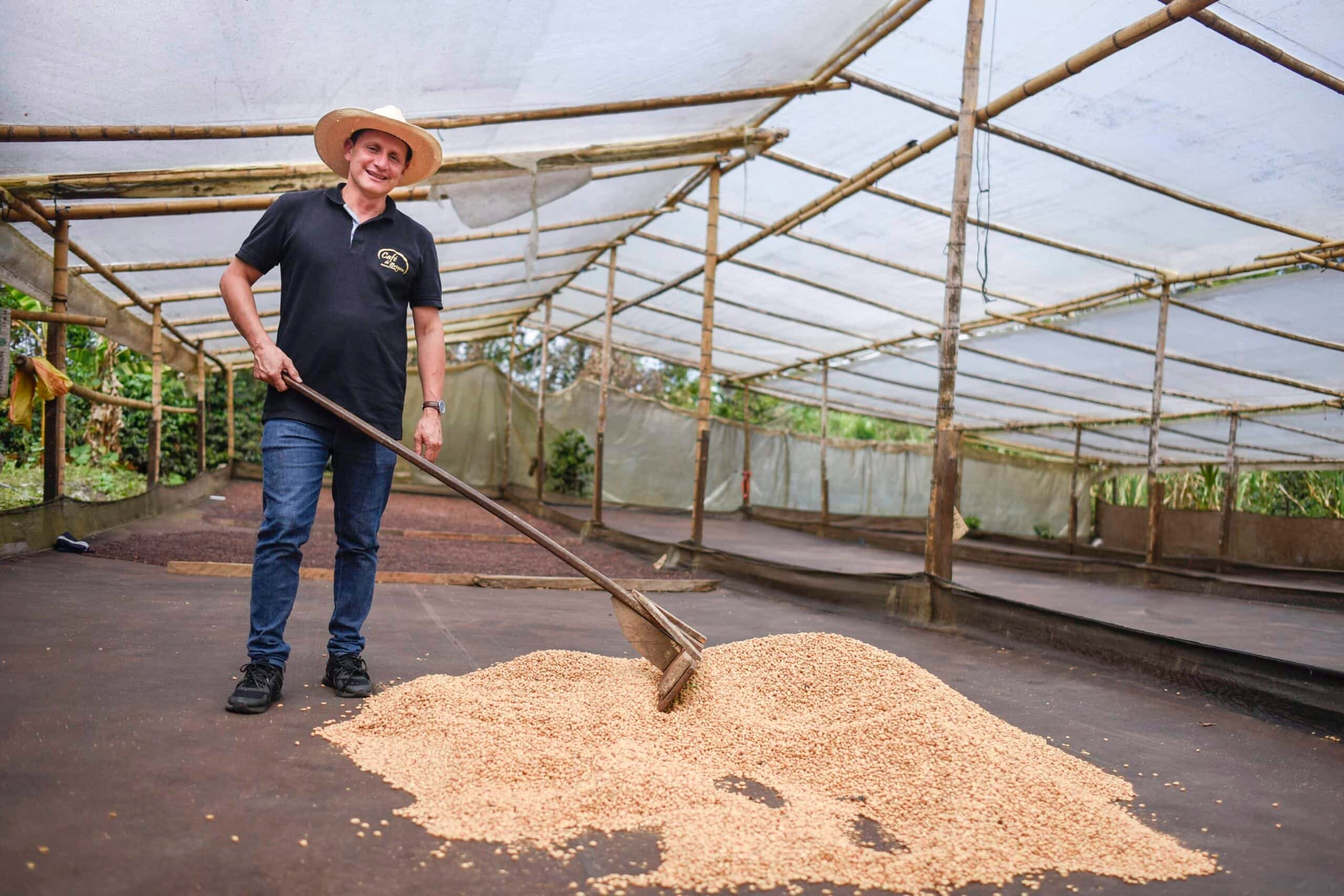
Cup profile: floral, lemongrass, herbs, grape, melon, tea-like, silky body Key facts: Sebastian Ramirez, El Placer, Quindio white honey, 1650-2000m Variety: Gesha About the coffee: Sebastian Ramirez is a fourth-generation coffee producer in Calarcá, Colombia. Six years ago, he took over the El Placer farm from his father - a difficult task, because although the region is famous for its coffees, it's difficult to live from growing coffee. But with a new approach, the focus on specialty coffee and his innovative processing methods that give the coffees their very own, characteristic aromas, success was not long in coming. About the processing: After harvesting, the cherries are fermented anaerobically in 200-liter barrels for 48 hours at constant 18°C. This is followed by a first drying phase (canopy drying) for around five days. The cherries are then immersed for 48 hours in water with the addition of oxygen (using a pump). Finally, a two-part final drying phase follows: first at 40°C and 25% humidity for around 20 days (marquee drying), followed by parabolic drying for around five days until the coffee has reached its optimum moisture content.


